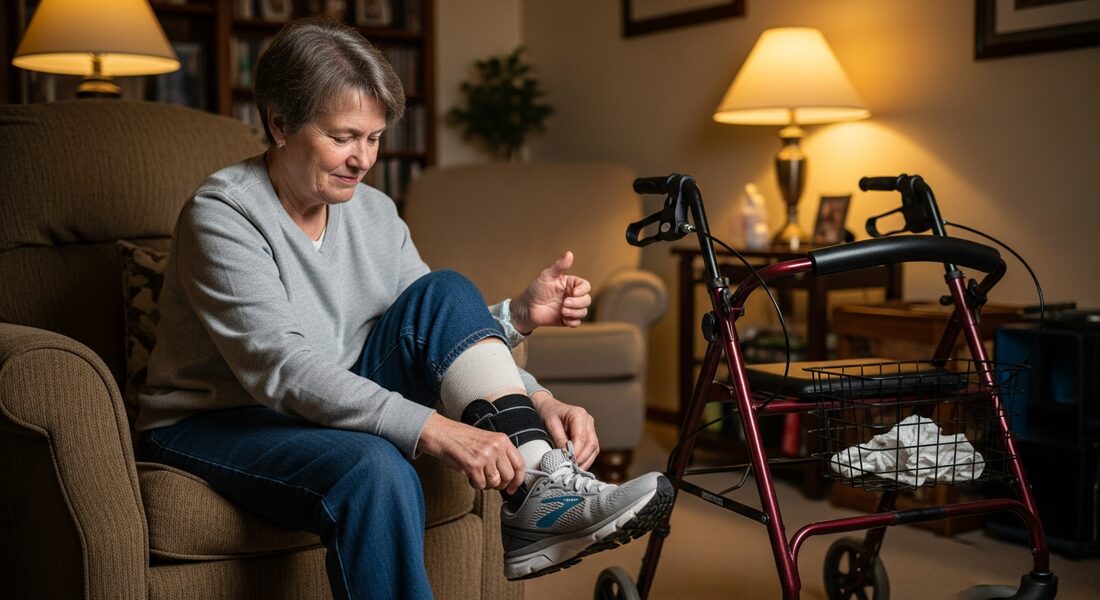
Looking for the best shoes for walking after a stroke? Prioritize a stable heel, enough depth for an AFO or swelling, and an entry you can manage safely.
By Nick Kremers, Stroke Survivor & Founder of Stroke Recovery Academy
Why Trust This Guide
This is written by Nick Kremers, who was paralyzed by a stroke, spent three years in a wheelchair, and rebuilt his way back to walking, typing, and training again. He built Stroke Recovery Academy out of that wheelchair, and everything on this page is filtered through what actually worked in his own recovery and the recoveries of the survivors he now coaches. Read his full story →
Key Takeaways
The Brooks Adrenaline GTS 24 is the PT-recommended stability benchmark shoe.
Your shoe decides whether you trip, compensate wrong, or actually walk well.
Every stroke shoe must meet four non-negotiables including stability and easy entry.
Skechers GoWalk Arch Fit Slip-Ins solve one-handed on-off without laces.
AFO users need extra depth and a specific fitting protocol.
Top Pick My Pick
Brooks Adrenaline GTS 24 — the PT-recommended stability shoe
GuideRails tech, DNA LOFT v3 cushioning, removable insole for AFO use, 4E width option. Most commonly recommended by stroke rehab PTs.
GuideRails stability, DNA LOFT v3 cushioning, removable insole, 2E and 4E widths. Size up half to full size for AFO use. The most PT-recommended structured shoe for stroke survivors.
Hands-free slip-in entry, ISOARCH support, machine washable, lightweight foam. For survivors who need morning independence. Not a motion-control shoe — if you need AFO compatibility, use the Brooks.
Drop foot. Spasticity. Weakness on one side. AFO use. Proprioceptive deficits. Balance impairment. Any one of these changes your footwear requirements. Most stroke survivors have two or three simultaneously.
The wrong shoe doesn't just feel bad. It increases fall risk, distorts gait mechanics, fights your AFO, and reinforces compensations — hip hiking, circumduction — that become learned-wrong patterns. The right shoe provides the stable base to trust your step, accommodates your brace if you wear one, and absorbs the asymmetric impact of a hemiparetic gait.
The non-negotiables for any stroke recovery shoe
The right shoe is not fashion — it is the base of every step you take.
Wide toe box: Spasticity drives toe curling and claw positioning. A narrow box compresses already-stressed intrinsic foot muscles and creates pressure points on feet with reduced sensation.
Firm heel counter: Weakness on the affected side means the ankle rolls. A firm heel counter is the first line of passive stability before the AFO.
Removable insole: If you wear an AFO, the insole comes out to make room for the footplate. Non-removable insoles make AFO use much harder.
Slip-resistant outsole: Low-friction sole is a fall. Every time.
Rocker or beveled sole: Compensates for reduced push-off on the affected side — the rocker does some of the work your calf can't.
Easy entry: Hemiplegia means one hand doing the work of two. Slip-ins and wide-entry designs aren't laziness — they are function.
Stroke recovery shoes compared at a glance
Both shoes below are recommended in this guide. Use the table to match the shoe to your biggest barrier — stability versus getting the shoe on alone — then read the full write-ups.
Stroke recovery shoes compared — Brooks for structure and AFOs, Skechers for hands-free entry.
Product
Best for
Key spec
Approx. price
Brooks Adrenaline GTS 24
Stability, AFO compatibility, ankle instability
GuideRails, DNA LOFT v3, removable insole, 2E/4E widths
Brooks Adrenaline GTS 24 — the structured support benchmark
The Adrenaline GTS line has been the go-to among stroke rehab PTs for years. The GTS 24 refines what already worked: GuideRails technology that controls excess movement at the knee and ankle without the rigidity of a traditional motion-control shoe, DNA LOFT v3 foam for cushioning that holds up across 500+ miles of compensated gait, and a wide platform that gives a hemiparetic foot something trustworthy to land on.
For stroke survivors: removable insole, firm heel counter, available in 2E and 4E widths. If you wear an AFO, the 4E width in a size up from your normal is the standard fitting protocol most orthotists use. Women's GTS 24 uses the same construction.
Brooks Adrenaline GTS 24 — Men's
GuideRails stability, DNA LOFT v3 cushioning, removable insole, 2E and 4E widths. Size up half to full size for AFO use. The most PT-recommended structured shoe for stroke survivors.
Skechers GoWalk Arch Fit Slip-In — the one-hand solution
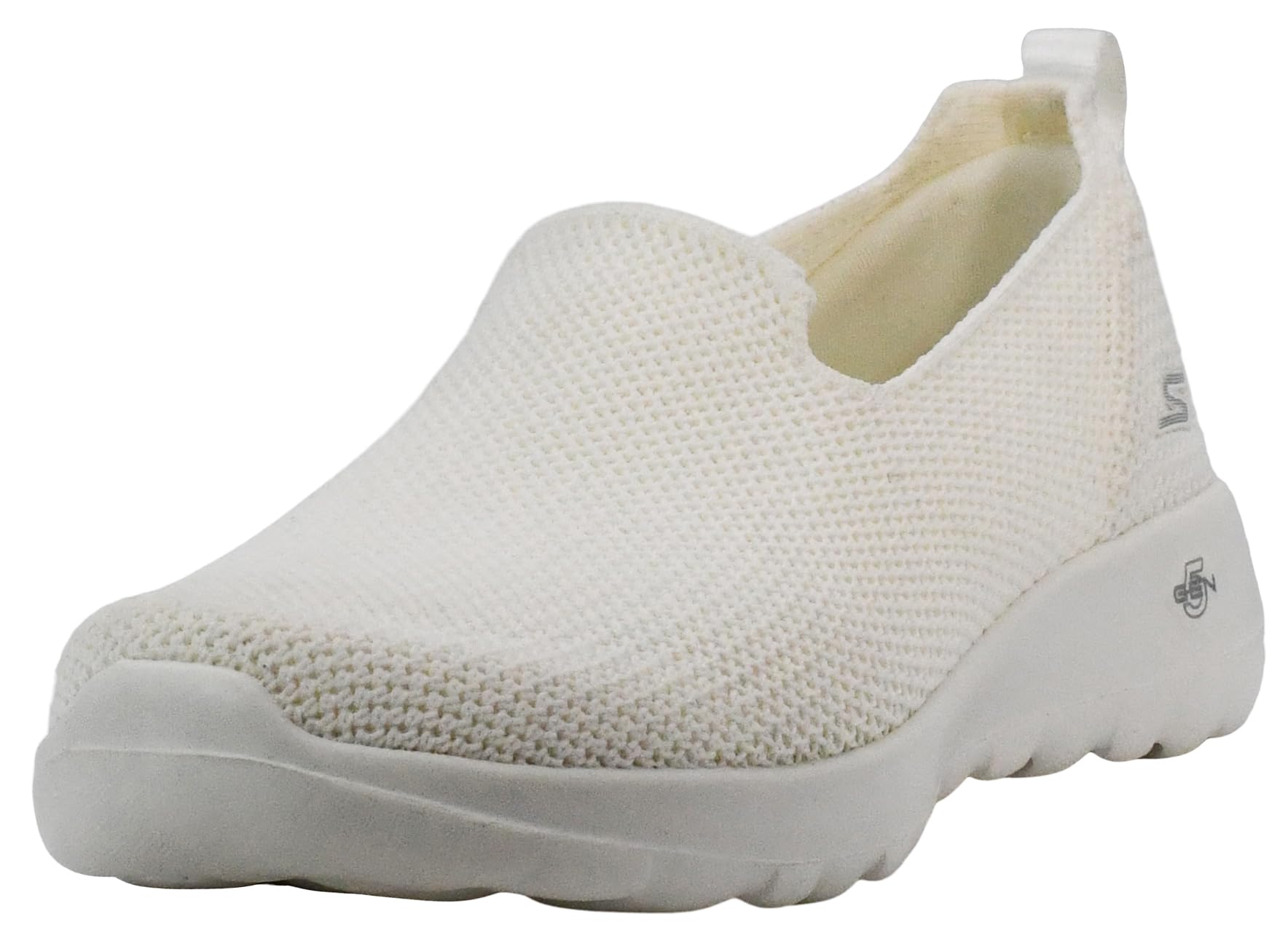
The Skechers GoWalk Arch Fit with the Slip-In design is the other shoe that comes up constantly in stroke survivor communities — and for good reason. ISOARCH support built into the footbed, machine-washable upper, ultra-lightweight foam midsole, and a hands-free slip-in heel design that makes getting dressed independently actually doable.
Where Brooks wins on stability, Skechers wins on function. For survivors with significant hand weakness, limited balance while standing to put on shoes, or anyone who values morning independence — the Slip-In is the difference between dressing with help and dressing alone.
Limitation: the GoWalk is not a motion-control shoe. Significant ankle instability or AFO use means the Brooks is the better structural choice. If your stability is adequate and the primary barrier is getting the shoe on, the Skechers wins.
Where Brooks wins on stability, Skechers wins on function. Morning independence starts with a shoe you can put on alone.
Skechers GoWalk Arch Fit Slip-In — Men's
Hands-free slip-in entry, ISOARCH support, machine washable, lightweight foam. For survivors who need morning independence. Not a motion-control shoe — if you need AFO compatibility, use the Brooks.
Bring your AFO to the fitting. Every time. Ordering online? Know the return policy before you buy.
Standard starting point: one full size up from normal, widest available width (4E for laced shoes). Remove the insole — the AFO footplate is your insole now. The heel counter must be firm enough that the AFO doesn't rock inside the shoe.
If the shoe's heel counter is too low, the AFO footplate will push the back of the shoe down. Most solid-ankle AFOs need at least a 1-inch heel counter height inside the shoe.
Yes — size up one full size, go widest available width (4E), remove the insole. The GTS 24's removable insole and wide-width options are why it is the most PT-recommended shoe for AFO users among traditional running shoes. Bring your AFO to any in-person fitting.
Are Skechers GoWalk shoes good for stroke survivors with drop foot?
For mild-to-moderate drop foot with adequate balance, yes — the lightweight sole and rocker geometry help. For more significant drop foot with ankle instability, the GoWalk lacks the structural support of the Brooks. Consider pairing it with a lightweight ankle brace for longer distances.
What shoe width do I need after stroke?
Most stroke survivors benefit from wide (2E) or extra-wide (4E). Spasticity causes toe curling that functionally widens the foot; swelling from reduced movement also increases forefoot width. If between sizes, go wider — a snug narrow shoe creates pressure points on a foot that may have reduced sensation.
Is it worth spending $130+ on stroke recovery shoes?
One fall costs more than a dozen pairs of shoes — medically, functionally, and psychologically. The Skechers at $65–$85 is excellent value for the right candidate. Start with the foot and balance assessment, then choose the shoe that fits that assessment.
Do I need special shoes for walking therapy?
Not "special" — but supportive. The criteria above apply whether you're in a clinic or walking your driveway. Avoid flat canvas shoes, minimalist soles, and anything without a firm heel counter during the acute and subacute phases. Your gait pattern is still being rebuilt — the shoe is part of the scaffolding.
Looking for the best shoes for walking after a stroke? Prioritize a stable heel, enough depth for an AFO or swelling, and an entry you can manage safely.