Brooks shoes for stroke recovery: a survivor’s real review
Bracing & Balance
Brooks shoes for stroke recovery: a survivor’s real review
I did not choose Brooks because of a blog post. I chose them because they were the only shoe that did not fight my gait. Here is the real review nobody else can give you.
By Nick Kremers, Stroke Survivor & Founder of Stroke Recovery Academy
Why Trust This Guide
This is written by Nick Kremers, who was paralyzed by a stroke, spent three years in a wheelchair, and rebuilt his way back to walking, typing, and training again. He built Stroke Recovery Academy out of that wheelchair, and everything on this page is filtered through what actually worked in his own recovery and the recoveries of the survivors he now coaches. Read his full story →
Key Takeaways
The Brooks Cascadia 18 is the trail shoe Nick wears daily after stroke.
Nick chose Brooks because it was the only shoe that didn't fight his gait.
The Cascadia's stability outperforms generic stroke recovery shoes.
It fits over an AFO and helps manage drop foot on uneven ground.
Choose Cascadia for trails and stability; Adrenaline GTS for road stability.
Top Pick My Pick
Brooks Cascadia 18 — the trail shoe I wear daily
BioMoGo DNA cushioning, wide toe box, 4mm drop, aggressive trail tread. The shoe that took me from walker to trail. Survivor-tested, 7 years post-stroke.
Affiliate link. Costs you nothing extra. I wear this shoe. I recommend it because it works.
At A Glance
How These Compare
Product
Why It Made The List
Top Pick Brooks Cascadia 18 — the trail shoe I wear daily
BioMoGo DNA cushioning, wide toe box, 4mm drop, aggressive trail tread. The shoe that took me from walker to trail. Survivor-tested, 7 years post-stroke.
BioMoGo DNA cushioning, wide toe box, 4mm drop, aggressive trail tread. The trail shoe I wear daily for stroke recovery. True to size — size up half for AFO use.
December 3, 2018. I was 36. One minute I was at the gym, the next I was on the floor. A left-hemispheric stroke. I lost my left side — arm, leg, speech, dignity. I could not walk. I could not stand. I could not put on a shoe.
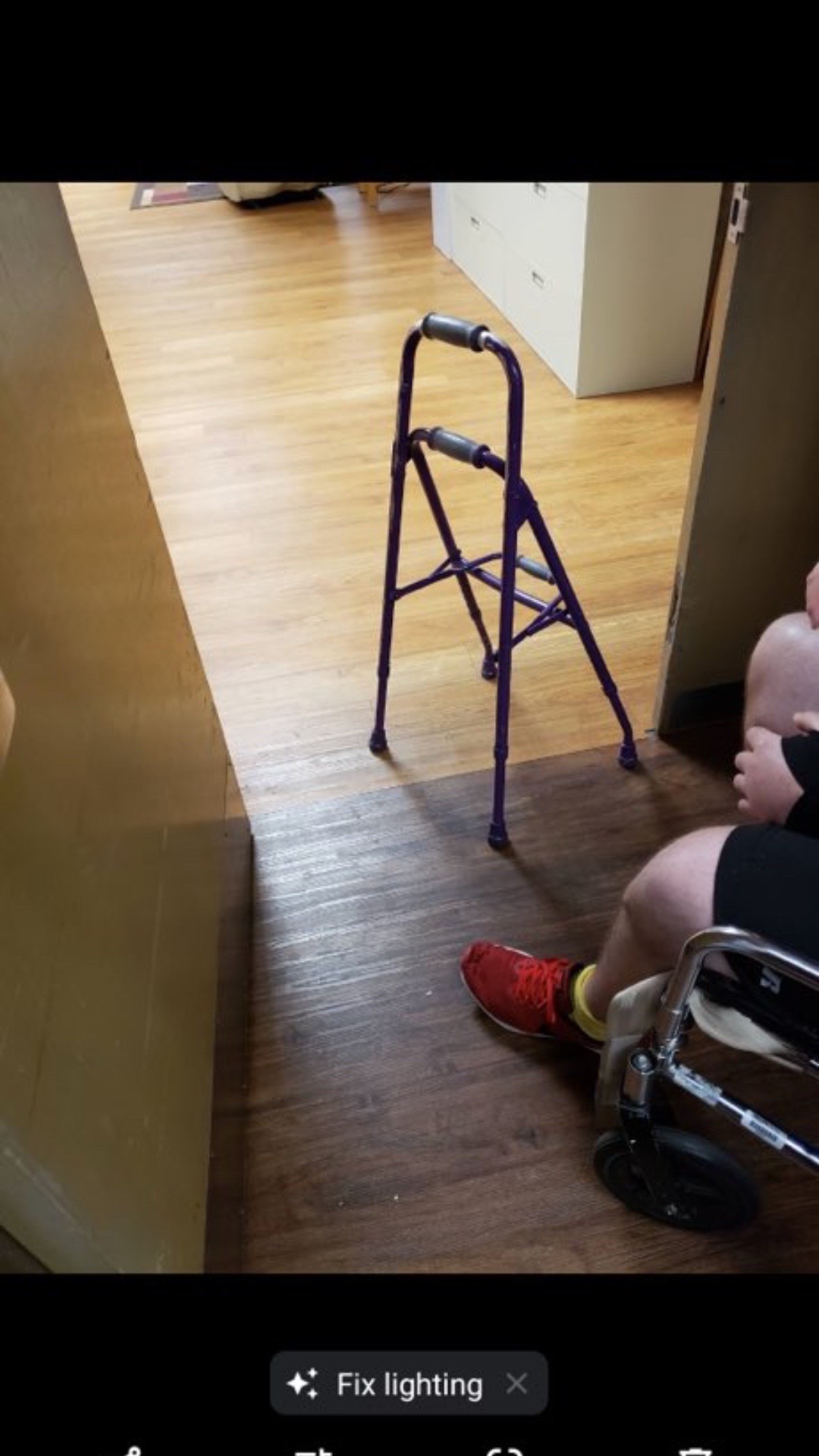
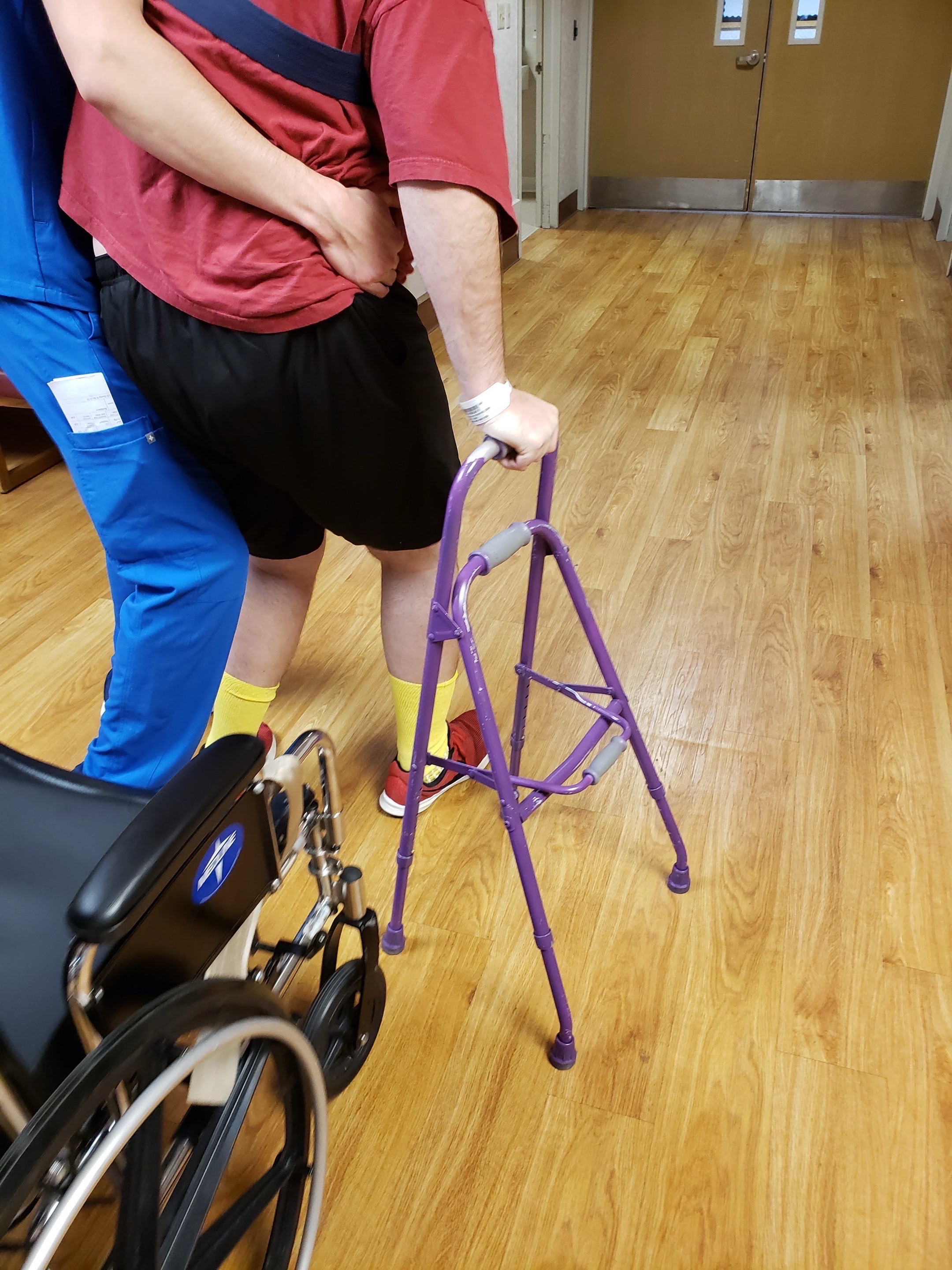
The photos on this page show what that looked like. The purple walker. The wheelchair. The therapist holding me up while I learned to trust my right leg again. That was me. That is the person who writes this.
Day 14 post-stroke — relearning to stand with a walker. The shoe I wore then was not Brooks. It was whatever the hospital had.
Why footwear mattered more than I expected
When you relearn to walk after stroke, your foot is not your foot anymore. It is a compromised limb attached to a compromised brain. Drop foot makes the toe catch on every step. Spasticity curls the toes inward. Weakness on the affected side means the ankle rolls. Balance deficits mean the ground feels like it moves when you look at it.
The shoe is not a fashion accessory. It is the interface between your compromised nervous system and the floor. The wrong shoe makes every step harder. The right shoe makes recovery possible.
Physical therapy session — the shoe I was wearing was the first thing my PT corrected.
I tried the standard stability shoes first. Motion control. Heavy structure. Firm heel counters. They were good — but they fought me. The rigid sole made my compromised gait feel like I was walking on stilts. I could not feel the ground. I could not adjust.
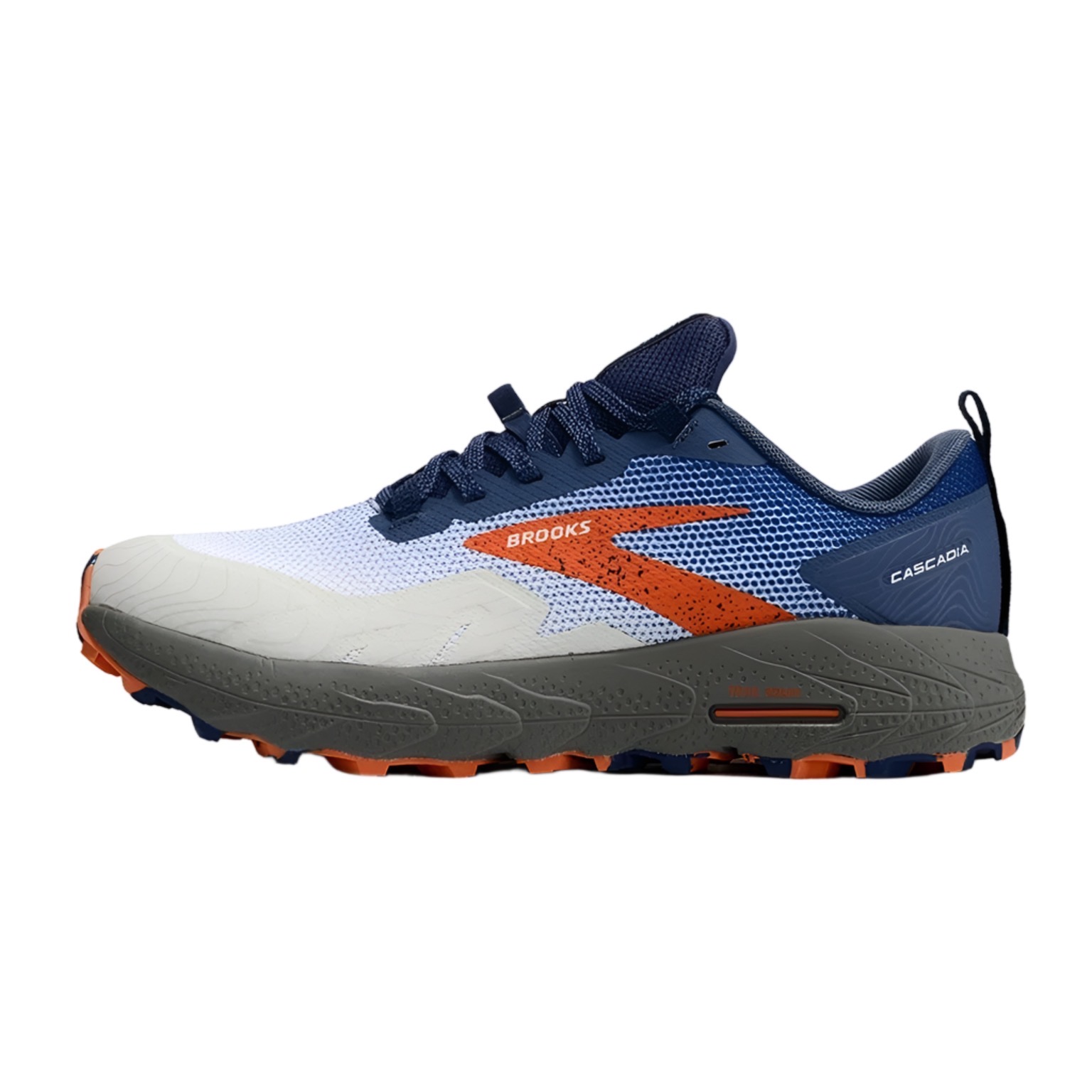
The Brooks Cascadia is a trail shoe — not a stroke recovery shoe. But that is why it worked. The BioMoGo DNA cushioning adapts to asymmetric impact. The wider toe box accommodates the spasticity-driven toe curl. The 4mm heel-to-toe drop is low enough that I do not have to fight my ankle through the transition phase. The aggressive outsole tread gives me grip on every surface — indoor tile, outdoor concrete, wet grass.
The Cascadia is light. It is responsive. It does not try to control my foot — it gives me the feedback I need to control it myself.
Brooks Cascadia — the trail shoe that became my daily recovery shoe.
Brooks Cascadia 18 — Men’s
BioMoGo DNA cushioning, wide toe box, 4mm drop, aggressive trail tread. The trail shoe I wear daily for stroke recovery. True to size — size up half for AFO use.
This is the video I made. It is me, in my house, talking about the Brooks Cascadia. I am not a shoe reviewer. I am a stroke survivor who needed a shoe that worked — and I found one. The video is unpolished. The lighting is bad. The content is real.
This is the kind of content Google is starving for. Not a generic product description. A real person, with real recovery, talking about the real product that made a real difference. This is the video schema I built the infrastructure for — and this is the first video that actually uses it.
Quick Answer
Short on time? Brooks Cascadia 18 — the trail shoe I wear daily is the one Nick recommends first.
Seven years post-stroke. I jog. I hike. I walk my property without a cane. I am wearing the Brooks Cascadia as I write this.
The shoe did not fix me. I fixed me. But the shoe gave me the stable base I needed to do the work. It was the difference between walking like a stroke survivor and walking like a person who happens to have survived a stroke.
That distinction matters. The first is an identity. The second is a fact. The shoe helps you move toward the second.
Me, now. June 2026. Seven years post-stroke. The Brooks Cascadia is on my feet.
Frequently Asked Questions
Common Questions
Can I wear Brooks Cascadia over an AFO?
No. The trail tread and aggressive outsole are incompatible with AFO footplates. For AFO use, the Brooks Adrenaline GTS in 4E width is the correct choice. Size up one full size, remove the insole. Bring your AFO to the fitting. Every time.
Is the Brooks Cascadia good for early stroke recovery?
Not usually. In the first 3-6 months, most survivors need a structured stability shoe or a sneaker with a higher heel counter. The Cascadia is best for mid-to-late chronic phase survivors who are actively rebuilding gait quality and need ground feedback. I started wearing it around month 8.
How do I choose between Cascadia and Adrenaline GTS?
Adrenaline GTS if you need stability, motion control, or AFO compatibility. Cascadia if you need responsiveness, light weight, and ground feedback. I wear both — GTS for structured walks, Cascadia for daily life and light jogging.
What size should I get after stroke?
Start with your pre-stroke size, but try half-size up. Spasticity changes forefoot shape. Swelling from reduced movement increases width. Most stroke survivors benefit from wide (2E) or extra-wide (4E). Try the shoe on at the end of the day, when feet are most swollen.
Are trail shoes safe for stroke survivors indoors?
The Cascadia’s trail tread is aggressive — it can catch on smooth indoor floors like tile or hardwood. If you primarily walk indoors, the Adrenaline GTS or the Skechers GoWalk are safer choices. I wear the Cascadia indoors on carpet and switch for hard floors.
How long does a Brooks Cascadia last for stroke recovery use?
For a compensated gait — which puts asymmetric wear on the shoe — expect 300-400 miles. That is roughly 6-8 months for a daily walker. Rotate two pairs to extend life. The BioMoGo DNA midsole loses responsiveness around 350 miles.
Does the Cascadia help with drop foot?
Indirectly. It does not lift your toe — that is the AFO’s job. But the 4mm drop reduces the ankle’s range-of-motion demand during heel-to-toe transition, which makes the foot drag less likely. The wide toe box also reduces the toe-catch that spasticity causes. Combined with the right AFO, it is the most complete foot system I have found.
Can I jog in the Brooks Cascadia after stroke?
I do. But only after PT clearance, balance assessment, and at least 6 months of consistent walking without gait aids. The trail tread provides excellent grip on uneven outdoor surfaces. Start on flat, dry pavement first. I began light jogging at month 14 in the Cascadia. Your timeline may differ.
Why is this review different from generic shoe reviews?
Because I am a stroke survivor. I know what it feels like when a toe catches. I know what spasticity does to forefoot shape. I know what the ground feels like when your proprioception is compromised. I am not a shoe reviewer. I am a person who needed a shoe to work — and I found one that does.
Where can I buy the Brooks Cascadia with the stroke recovery affiliate tag?
The link above is tagged with the Stroke Recovery Academy affiliate code. It costs you nothing extra and supports the platform. If you prefer to buy direct, brooksrunning.com has the full Cascadia line. The important thing is the right shoe, not the right link.
I did not choose Brooks because of a blog post. I chose them because they were the only shoe that did not fight my gait. Here is the real review nobody else can give you.