AFO vs Electric Ankle Trainer: Which Should You Buy First?
Stroke Recovery Blog

AFO vs electric ankle trainer: which one first?

I bought the AFO first and used it for two years. I bought the electric trainer second and left the AFO in a drawer four months later. Here is the order I wish I had used.

As an Amazon Associate, Stroke Recovery Academy earns from qualifying purchases. No cost to you.
Nick Kremers
Written by Nick Kremers · 7-year stroke survivor.
Last reviewed: 2026-07-28
2 min read · 477 words
Medically reviewed by SRA clinical advisory team

What an AFO does

An ankle-foot orthosis (AFO) is a brace that holds your foot at ninety degrees, preventing the toe from catching the ground. It is the standard prescription for drop foot after stroke. It works immediately. It prevents falls. It is covered by most insurance. And it is the single biggest trap in early recovery.

The AFO teaches the brain that the ankle does not need to work. The sensorimotor cortex stops trying to fire the dorsiflexor muscles because the brace is doing the job. The result: the ankle atrophies further, the pathway degrades faster, and the survivor becomes more dependent on the brace over time instead of less.
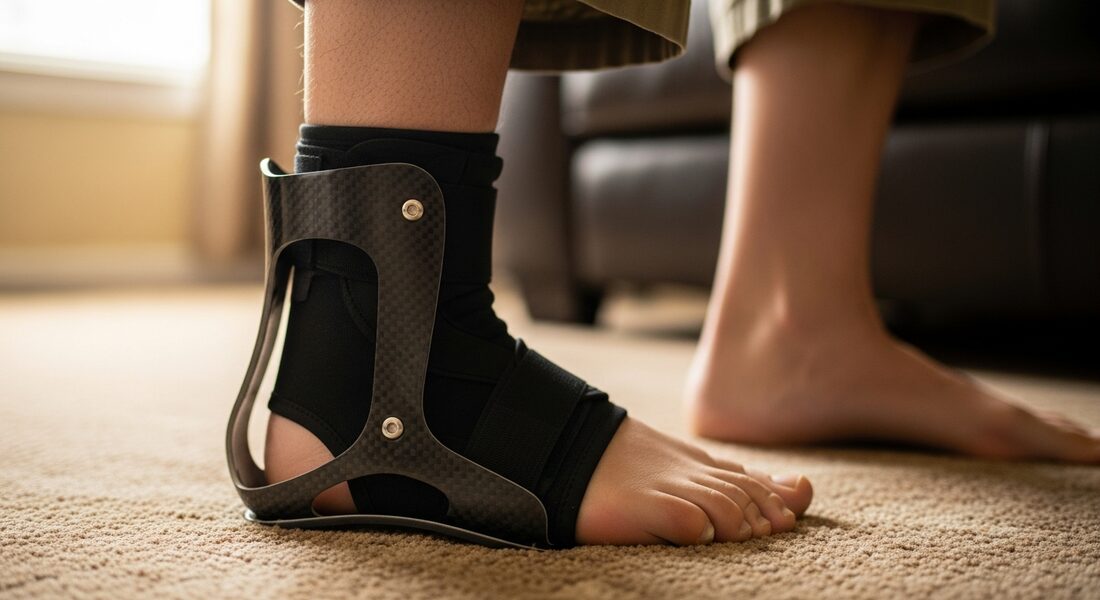
Stroke survivor wearing a carbon-fiber AFO brace on their affected leg
The AFO works immediately — but it is a bridge, not a destination.

What an electric trainer does

The electric ankle rehabilitation trainer moves the ankle through a full range of motion while the muscle actively engages. It provides the repetition, the full arc, and the consistency that neuroplasticity requires. It does not prevent falls today — it rebuilds the ankle so you do not need prevention tomorrow.

The key difference is active vs passive. The AFO is passive. The electric trainer is active-assisted. The brain only rewires when it is asked to participate. The electric trainer asks the motor cortex to participate hundreds of times per session.

The order I wish I had used

If I were rebuilding my recovery from scratch, I would buy the electric trainer in month two — as soon as I had medical clearance for active movement. I would use it daily for three months while still wearing the AFO for safety during walks outside. By month four, I would test walking indoors without the AFO. By month six, the AFO would be in the drawer.

The mistake I made: I bought the AFO, used it exclusively, and did not start active training until year two. By then, the motor pathway had degraded significantly. I spent six months catching up to where I could have been at month six. The AFO is a safety tool. The electric trainer is a recovery tool. Use both — but use the recovery tool as early as possible.

The cost comparison

AFOs range from $50 for off-the-shelf models to $800+ for custom carbon-fiber. They are usually covered by insurance. The electric ankle trainer is a one-time purchase at a higher price point. Over two years, the AFO costs less. Over five years, the trainer costs far less — because it eliminates the need for the AFO and reduces the risk of falls, sprains, and the secondary costs that come with them.

Frequently asked questions

Can I use both at the same time?

Yes. Many survivors use the AFO for safety during outdoor walks while training with the electric device at home. This is the safest hybrid approach. The AFO protects you from falls; the trainer rebuilds the muscle that will eventually make the AFO unnecessary.

How do I know when to stop using the AFO?

Test indoors first. Walk across a room without the AFO. If you can lift the toe on every step and the gait is stable, you are close. A formal gait analysis by a physical therapist is the safest way to confirm.

Will insurance cover the electric trainer?

Some insurers cover it as durable medical equipment with a prescription. Others classify it as a consumer fitness device. Call your insurer and ask about coverage for "ankle rehabilitation device" or "motorized ankle trainer." A letter from your physical therapist helps.

Is the AFO bad for recovery?

The AFO is not bad — it is incomplete. It prevents falls but does not rebuild the ankle. The danger is using it as the only solution. If you wear the AFO and do nothing else, the ankle will weaken. If you wear the AFO and train actively, the AFO becomes a temporary bridge, not a permanent fixture.

Electric Ankle Rehabilitation Trainer

3-speed motorized ankle rehab with full arc. The active trainer I used to leave my AFO in a drawer for good.

Check price on Amazon
Affiliate link — I earn a small commission at no extra cost to you.

Want the full recovery blueprint?

My book covers the daily routine, the mindset, the gear, and the protocols that took me from 0% to 90%+.

Get the book

Start your recovery free.

Daily routine. AI coach. 66-day challenge. Built by a survivor for survivors.

Create free account