Threshold Ramps, Grab Bars, and Home Accessibility Upgrades for Stroke Survivors
Stroke Recovery Blog

Threshold Ramps and Home Accessibility for Stroke Survivors: What to Buy and Where to Put It

A threshold is a two-inch ledge. After stroke it's a fall risk. A $30 rubber ramp eliminates it. Most survivors don't buy it until after they fall. Don't be that survivor.

As an Amazon Associate, Stroke Recovery Academy earns from qualifying purchases. No cost to you.
Nick Kremers
Written by Nick Kremers · 7-year stroke survivor.
Last reviewed: 2026-07-28
1 min read · 0 words
Medically reviewed by SRA clinical advisory team

The fall risk reality of post-stroke home environments

Falls are the most common serious adverse event in stroke recovery — in both inpatient and outpatient settings. Up to 73% of stroke survivors fall in the first six months post-discharge. More than half of those falls happen in the home. The majority happen during transitions: transferring from sitting to standing, crossing thresholds, bathroom activities, and stair navigation.

Home modification is the highest-leverage fall prevention intervention available. It's not as visible as PT progress or as exciting as adaptive equipment. But a grab bar that prevents one fall in year one is worth more to your recovery than six months of resistance training — because a fall-related injury resets the entire timeline.
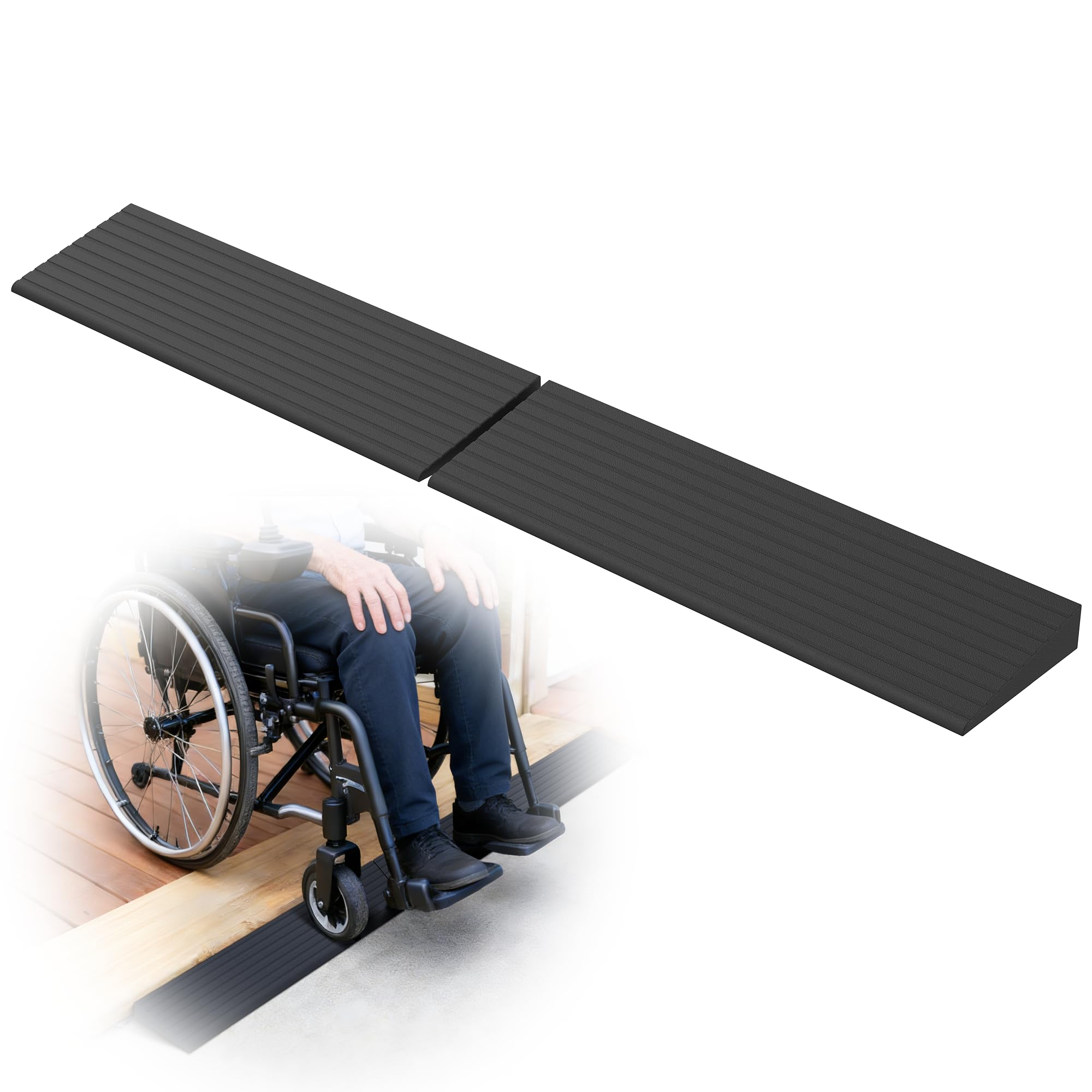
EZ-ACCESS TRANSITIONS threshold ramp — the essential first purchase

EZ-ACCESS TRANSITIONS Modular Angled Entry Ramp

Rubber threshold ramp, multiple height options, no installation required, non-slip. Most essential home accessibility purchase for foot-drop and hemiparetic gait.

Check Current Price on Amazon ↗

The EZ-ACCESS TRANSITIONS ramp is a rubber threshold transition ramp that eliminates the raised threshold between rooms — the 0.5"–2.5" ledges at doorways, shower entries, and sliding door tracks that are tripping hazards for foot drop and compromised gait. It's held in place by the weight of traffic (no permanent installation required), works for both wheelchair and ambulatory use, and comes in multiple heights for different threshold sizes.

Measure your thresholds before ordering — the height needs to match the threshold. The angled entry edge is gentle enough for foot drop clearance. Non-slip rubber surface. Costs $25–$45 depending on size. A legitimate first-week-home purchase that every survivor returning to a standard home environment should make.

AmazonBasics grab bars — bathroom fall prevention

Amazon Basics Grab Bar for Bathroom, 24"

ANSI-compliant, 1.25" diameter, 250 lb rated, stud or toggle-bolt mount. Install at toilet and shower entry — the two highest fall-risk transfer points.

Check Current Price on Amazon ↗

Grab bars in the bathroom are the second-most-important modification after threshold ramps. The toilet transfer (sit to stand) and the shower entry are the two highest-fall-risk moments of a post-stroke survivor's day. A properly installed grab bar at each location converts a fall risk into a controllable transfer.

Key specification: stainless steel, 1.25" diameter (the ANSI-standard for grab bar grip), rated to 250+ lbs, with a mounting template included. The AmazonBasics bars are ANSI-compliant and come in multiple lengths (16", 24", 32", 42"). Installation into stud or into drywall with toggle bolts — wall studs are strongly preferred for weight-bearing use. If you're not confident in the installation, hire a handyman. A $40 bar improperly installed that pulls out of the wall during a transfer is worse than no bar.

Prairie View portable wheelchair ramp — for steps and raised entries

Prairie View Industries Portable Wheelchair Ramp

Solid aluminum, non-slip surface, 3–10 ft lengths, folds flat. For exterior steps or raised entries — essential for wheelchair or rollator users.

Check Current Price on Amazon ↗

For survivors using a wheelchair or rollator who face exterior steps — a single step at the front door is a common barrier — a portable aluminum ramp provides access without permanent construction. The Prairie View Industries solid aluminum ramps are the standard: non-slip surface, fold flat for storage, available in lengths from 3 to 10 feet. Length selection: for a 6" step height, a 3-foot ramp gives a 1:6 rise ratio — steeper than the ADA standard but manageable with a rollator or assistance. A 4-foot ramp gives 1:8, which is better for independent use.

Heavier than it looks — the 5-foot version weighs 22 lbs. Factor in who is setting it up and whether the survivor or a caregiver handles placement daily.

The full home safety audit: where to look

Thresholds and bathroom grab bars are the two immediate purchases. The full audit takes 30 minutes with an OT or your own eyes:

Entryways: Every raised threshold covered. Non-slip mat at entry if there's a step. Adequate lighting (falls happen in the dark — motion-sensor lights are $15 on Amazon).

Bathroom: Grab bar at toilet (side wall for push-up assist, rear wall for balance). Grab bar at shower entry. Non-slip bath mat. Shower chair or shower bench for low endurance/balance (see shower safety post). Handheld showerhead for seated bathing.

Bedroom: Bed height that allows feet flat on the floor in sitting (not too low, not too high). Clear path to the bathroom — no rugs, no loose cords. Nightlight or motion sensor for nighttime bathroom trips.

Stairs: If there are stairs and the survivor must use them: double handrails, non-slip treads, maximum lighting. If stairs cannot be safely negotiated: stair lift evaluation or first-floor living arrangement.

Frequently asked questions

Does Medicare cover home modifications for stroke survivors?

Standard Medicare (Parts A and B) does not cover home modifications. Some Medicare Advantage plans cover limited modifications under supplemental benefits. Medicaid waiver programs in some states cover home modification for qualifying members. USDA Rural Development and HUD programs provide low-income modification grants. The most reliable path: request an OT home visit through your home health benefit — the OT's written recommendations become the basis for any funding applications.

What's the most important home modification to make first?

Bathroom grab bars, followed by threshold ramps at all exterior entries and major interior transitions. The bathroom is where the highest-consequence falls happen — a fall getting out of the shower or off the toilet can break a hip, and hip fractures after stroke have devastating outcomes. Do the bathroom first, then the thresholds.

Do I need a stair lift after stroke?

Only if you cannot safely navigate stairs with a railing and appropriate gait pattern. Many stroke survivors can manage stairs safely with PT training and adequate handrails — stairs are a recoverable functional deficit. A stair lift is the right solution when: both staircases and single-floor ramps are unsafe, the survivor will be living alone, or the fatigue cost of stairs is prohibitive. Stair lift companies (Acorn, Bruno) provide in-home assessments — use them before committing.

Can I install a grab bar myself after stroke?

The installation itself is a standard DIY task for someone with reliable hand function and basic tools. The critical requirement: mounting into studs or using proper toggle anchors rated for the load. A grab bar that pulls from drywall under load is a fall cause, not a fall prevention. If you're uncertain about the mounting, hiring a handyman for a $50–$100 job is the right call.

My home has carpet — does that affect fall risk?

Paradoxically, carpet reduces fall risk on flat surfaces (softer landing, more friction) but increases it at transitions between flooring types. The carpet-to-hardwood edge, especially if there's a lip or a curling edge, is a significant tripping hazard for foot drop and impaired proprioception. Secure all transition strips and remove or secure area rugs throughout the home.

EZ-ACCESS TRANSITIONS Angled Entry Ramp

Check Current Price on Amazon
Most essential home accessibility purchase for foot drop and hemiparetic gait. No installation required. Affiliate link.

Home safety and independence in the book

THE ULTIMATE STROKE RECOVERY REVOLUTION covers the home environment audit, fall prevention, and the adaptive equipment ecosystem that keeps recovery momentum from being derailed by an avoidable injury.

Get the book

Start your recovery free.

Daily routine. AI coach. 66-day challenge. Built by a survivor for survivors.

Create free account