Best Exercise Bikes for Stroke Patients: Stationary, Recumbent & Upright Compared
Stroke Recovery Blog

Best Exercise Bikes for Stroke Patients

Seated. Supported. Safe. The recumbent bike is how most stroke survivors should start building cardiovascular fitness — and the evidence agrees.

As an Amazon Associate, Stroke Recovery Academy earns from qualifying purchases. No cost to you.
Nick Kremers
Written by Nick Kremers · 7-year stroke survivor.
Last reviewed: 2026-07-28
1 min read · 0 words
Medically reviewed by SRA clinical advisory team

Recumbent first, upright later

I started on a recumbent bike three weeks post-discharge. Couldn't stand for more than a minute without significant fatigue, balance was unreliable, affected leg wasn't doing much. The recumbent didn't care. Back supported, pedals out in front, nothing to fall off of. Fifteen minutes at almost zero resistance. That was enough to start.

The recumbent vs. upright decision isn't about fitness preference — it's a clinical one. If you have: significant trunk weakness, balance deficits that require concentration to maintain, or fatigue that limits standing tolerance, start recumbent. Move to upright when your PT clears you for seated-balance work without back support.

The upright bike gets added value for core engagement and posture — but that value is zero if you're gripping the handlebars to stay upright rather than pedaling effectively.
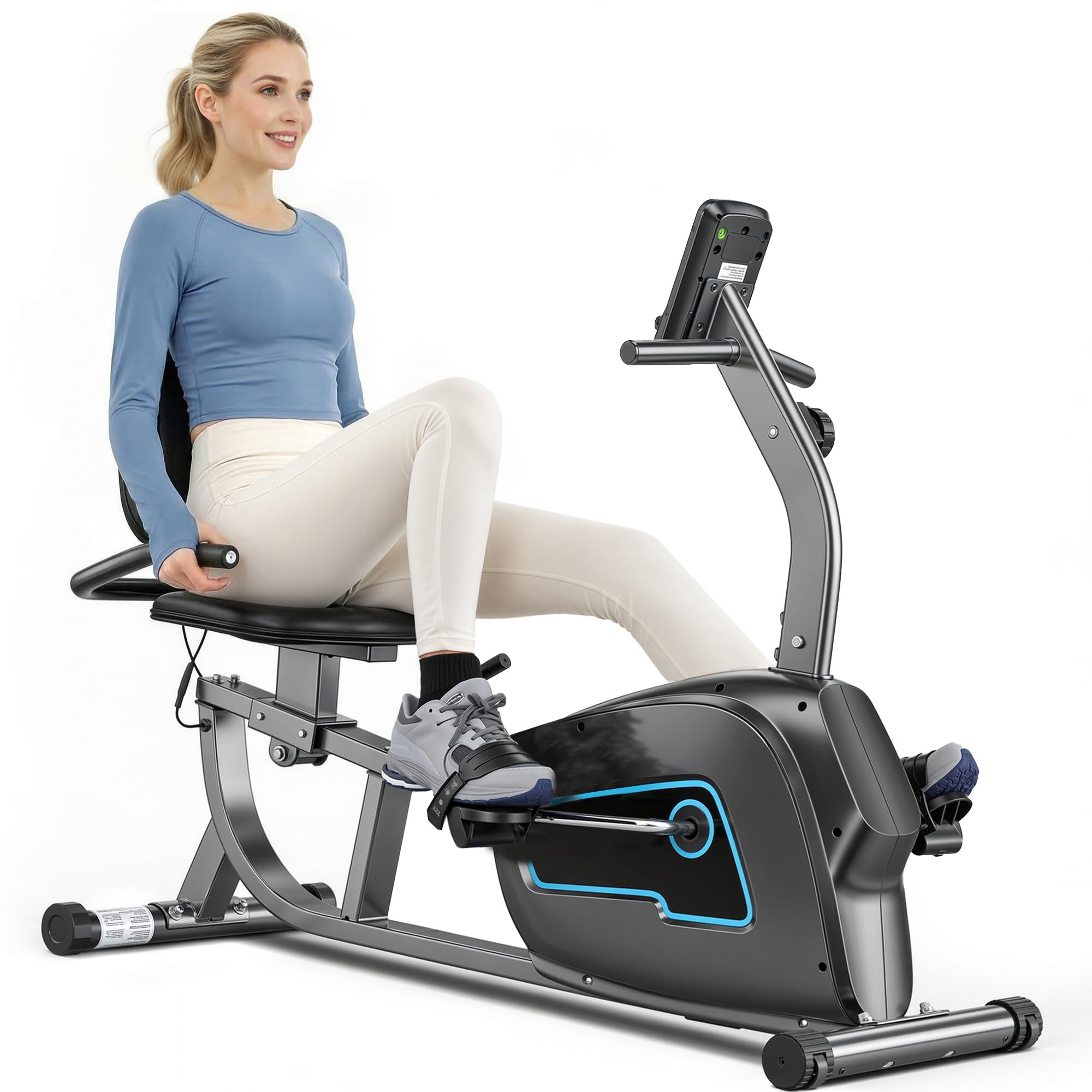
Marcy ME-709 — the recumbent for most stroke survivors

Marcy Recumbent Exercise Bike ME-709

Low step-through frame, 8 resistance levels, back support with lumbar extension, oversized pedals with straps. Best value recumbent for early stroke recovery.

Check Current Price on Amazon ↗

The Marcy ME-709 is the recumbent bike I see recommended most frequently in stroke survivor communities — and for good reason. Eight resistance levels (enough range for the 0–18 month window), a step-through frame with a very low bar clearance, back support that actually extends to the lower lumbar, and oversized pedals with adjustable straps that work even with foot drop. It folds for storage, which matters in most home setups.

What it's not: a performance machine. The resistance knob is manual, the console is basic, and the seat comfort is average over 30+ minutes. For stroke recovery purposes, none of that matters. What matters is that it's stable, accessible, and does the job.

Schwinn 270 Recumbent — more resistance range, better data

Schwinn 270 Recumbent Exercise Bike

25 resistance levels, Bluetooth, 29 programs. The step-up from the Marcy for survivors 6+ months out who need more range.

Check Current Price on Amazon ↗

The Schwinn 270 is the upgrade from the Marcy. Twenty-five resistance levels, 29 built-in programs, Bluetooth connectivity for app integration, and a more comfortable seat. The additional resistance range matters once you're 6–12 months into recovery and the low end of the Marcy feels too easy — you don't want to buy a second machine.

The step-over height is slightly higher than the Marcy — verify this is workable for your hip flexion and balance before ordering. Most stroke survivors at the Schwinn 270 stage are past the point where this is an issue, but it's worth checking.

Using the bike effectively: the affected leg problem

The most common mistake on a stationary bike post-stroke: letting the strong leg do 90% of the pedaling and the affected leg ride along. This is worse than not using the bike — you're reinforcing asymmetry and teaching the brain that the affected leg doesn't need to contribute.

Fix: reduce resistance to the point where the affected leg can actually push. Consciously think about the push phase on that side. Some survivors use a slight heel wedge under the affected foot to compensate for plantarflexion spasticity that prevents a full pedal stroke. Ask your PT before adding any modifications.

Heart rate target: 50–70% of age-predicted max for most of recovery. In the acute phase, RPE (rate of perceived exertion) of 12–14 on the Borg 20-point scale — "somewhat hard." Not gasping, not coasting.

Frequently asked questions

When can I start using a stationary bike after stroke?

With medical clearance, many survivors start recumbent cycling 2–4 weeks post-discharge. The key clearances: cardiovascular stability, no DVT contraindication, no uncontrolled hypertension with exercise. Get explicit clearance from your neurologist or physiatrist before starting.

Can I use a stationary bike if I have foot drop?

Yes — a recumbent bike with adjustable pedal straps works well for mild-to-moderate foot drop. The strap keeps the foot in position through the full pedal rotation. For severe drop foot with ankle instability, consult your PT about whether your AFO is appropriate for cycling use.

How long should I bike each session during stroke recovery?

Start at 10–15 minutes. Add 5 minutes per session if you feel good the next day. Work toward 30–45 minutes at moderate intensity. More isn't always better — post-stroke fatigue can delay recovery if you push past your current capacity consistently.

Should I get a recumbent or upright bike?

If you have any trunk weakness, balance deficits, or are less than 6 months post-stroke: recumbent. If your balance is stable, you can maintain upright seated posture without gripping for support, and your PT has cleared progressive loading: upright gives you more core engagement. When in doubt, start recumbent.

Is a spin bike (like Peloton) appropriate for stroke recovery?

Generally not in the first year. Spin bikes require significant hip flexor and core engagement to maintain position, have no back support, and the lean-forward posture is demanding. The Schwinn IC4 or similar is appropriate for mid-to-late chronic phase survivors with good trunk control — not early recovery.

Marcy Recumbent Bike ME-709

Check Current Price on Amazon
Best value recumbent for stroke recovery. Low step-through, back support, adjustable pedal straps. Affiliate link.

The full exercise protocol is in the book

THE ULTIMATE STROKE RECOVERY REVOLUTION covers the cardio progression, week-by-week scheduling, and the mindset required to stay consistent when fatigue makes everything harder.

Get the book

Start your recovery free.

Daily routine. AI coach. 66-day challenge. Built by a survivor for survivors.

Create free account