Best Speech Therapy Apps and Tools for Aphasia After Stroke
Your SLP sees you once or twice a week. The other 22+ hours belong to you. The right tools turn that time into meaningful practice instead of missed recovery.
The home practice gap — why it matters more than your SLP can say
The research on aphasia recovery is unambiguous on one point: intensity matters. The number of hours of practice per week is the strongest predictor of language recovery, more than the specific therapy approach used. Clinical SLP visits are typically 1–3 hours per week. The survivors who make the most progress practice daily — often 45–90 minutes per day — using apps and structured exercises between sessions.
Most SLPs want their patients practicing at home and will often provide specific targets. The problem is follow-through: the exercises feel hard, progress is slow, and without external structure it's easy to skip days. The best tools listed here address the motivation and structure problem, not just the content problem.
Constant Therapy — the most clinically validated app
Clinically validated, 100,000+ exercises, adaptive difficulty, tracks progress over time. The highest-evidence home speech and cognitive therapy app for aphasia and stroke.
Check Current Price on Amazon ↗Constant Therapy (available on iOS and Android, subscription-based) is the most studied speech and cognitive therapy app for stroke and aphasia in published literature. It provides over 100,000 exercises across language, speech, memory, and attention domains — personalized to your specific deficit profile based on initial assessment. The platform tracks performance over time and adjusts difficulty, replicating what a skilled SLP does but at home, on your schedule, for as many daily minutes as you can manage.
The subscription runs $25–$30/month. One month of daily 30-minute sessions is the equivalent of 15 hours of supplementary therapy — at a fraction of the cost of a single SLP session. The app was originally developed at Boston University's Aphasia Research Laboratory; the evidence base is not marketing, it's peer-reviewed.
Speech Tutor app — articulation and dysarthria
Visual phoneme models for articulation practice, one-time purchase. Best for dysarthria — motor speech difficulties, not word-finding or comprehension.
Check Current Price on Amazon ↗Where Constant Therapy covers language and cognition broadly, Speech Tutor is specifically for articulation — the motor planning of speech sounds that dysarthria disrupts. The app provides visual models of mouth position for each phoneme, which is particularly useful for survivors who can hear that their speech is wrong but can't feel exactly where the placement error is. Video-based, no subscription, one-time purchase.
Best for: dysarthria (slurred, imprecise speech from motor weakness) rather than aphasia (word-finding, comprehension, or sentence construction errors). If your SLP has identified articulation accuracy as a primary goal, Speech Tutor provides the visual feedback that home mirror practice can't match.
Communication and AAC tools for severe aphasia
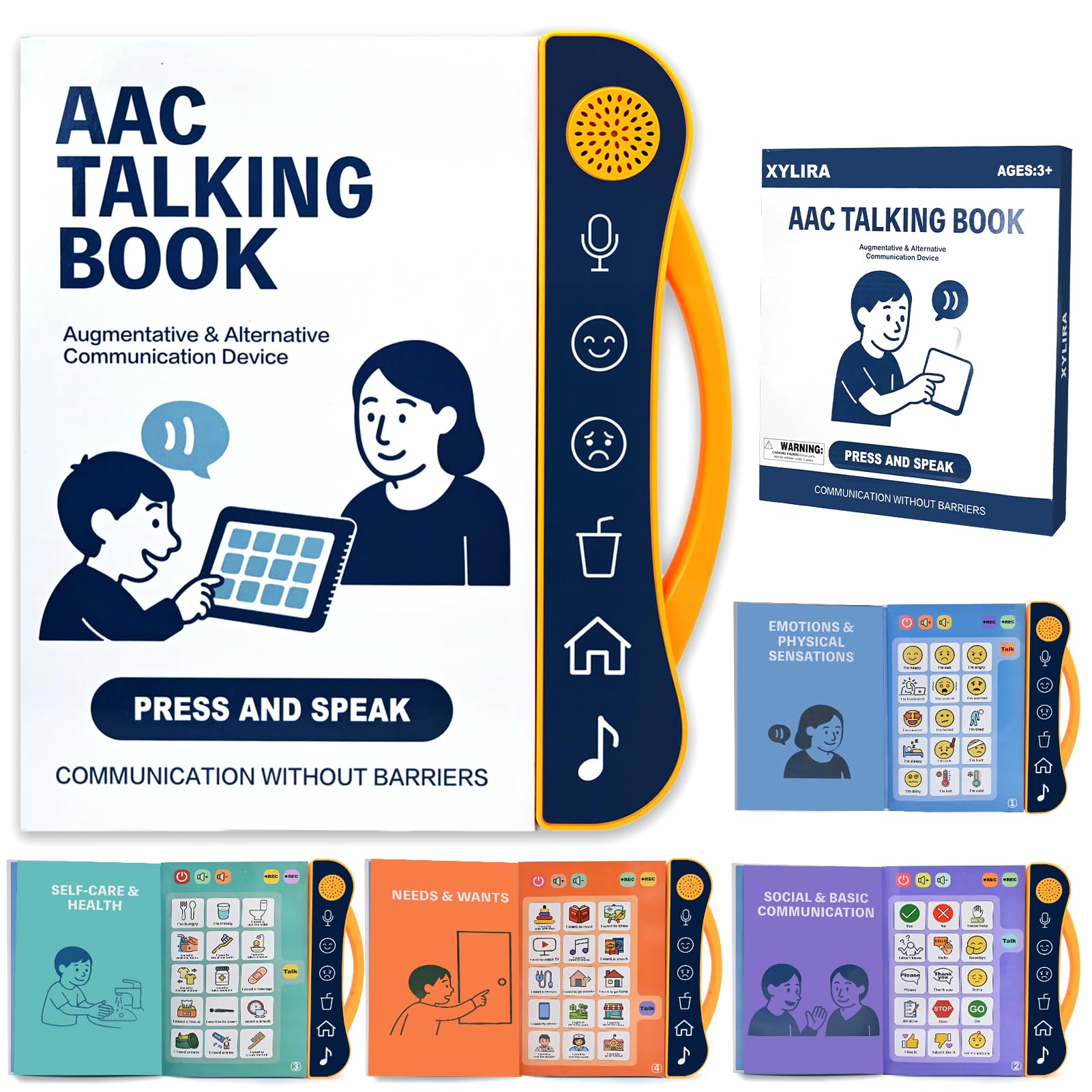
20 symbol locations, recorded messages, durable. Appropriate bridge device for severe expressive aphasia when app-based AAC is too complex.
Check Current Price on Amazon ↗Low-tech laminated picture board for basic needs and emotions. Essential acute-phase communication tool before formal AAC assessment.
Check Current Price on Amazon ↗For survivors in the acute or early subacute phase with severe expressive aphasia, low-tech AAC (augmentative and alternative communication) provides a communication bridge while language recovery is underway. Communication boards — visual symbol arrays for basic needs, emotions, and requests — can be printed or purchased as pre-made laminated sets and kept at bedside.
The GoTalk 20+ is a mid-level dedicated AAC device with 20 symbol locations, recorded messages, and a durable design for survivors who need more functionality than a paper board but aren't ready for the complexity of an app-based system. Your SLP or an AT specialist should guide AAC device selection — the wrong device is abandoned.
Workbooks for supported home practice
For survivors who prefer structured paper-based practice — or whose SLP has prescribed specific exercise types that apps don't cover well — the Aphasia Therapy Workbooks by Thieme and the exercises in Roberta Chapey's Language Intervention Strategies in Aphasia are the clinical standards. The Workbook for Aphasia by Susan Howell Brubaker remains widely used by SLPs for home programming.
Paper workbooks work alongside app-based practice, not instead of it. The tactile and visual format suits some survivors better than a screen. For word-finding exercises specifically, written naming tasks on paper give the hand and visual system something to do alongside verbal practice — a multimodal approach that matches what most aphasia researchers recommend.
Frequently asked questions
What is the best app for aphasia recovery after stroke?
Constant Therapy has the strongest published evidence base and the broadest exercise coverage. Tactus Therapy apps are strong alternatives for specific skill areas. Lingraphica's TalkPath is another evidence-backed option. Your SLP should guide app selection based on your specific aphasia profile — the right app for Broca's aphasia is not the right app for Wernicke's.
How many hours of speech therapy practice do I need per day?
Research suggests 45–90 minutes of daily practice produces the best aphasia recovery outcomes. That's total practice time, not all in one sitting — three 20-minute sessions per day is equivalent to one 60-minute session and may be more sustainable given post-stroke fatigue. Even 30 minutes per day is substantially better than no home practice.
Will aphasia ever fully recover?
For many survivors: yes, particularly in the first 3–6 months post-stroke. For others: significant but incomplete recovery. The key variables are stroke location (which language network areas were affected), stroke size, age, and most importantly — intensity of rehabilitation in the first two years. Chronic-phase improvement is possible but requires sustained effort. I've seen survivors make meaningful language gains five-plus years out with adequate intensity.
My family member has severe aphasia and can't use an app independently. What helps?
Supported communication practice — a caregiver working through exercises with the survivor using a simple app or workbook — produces better outcomes than unsupported solo practice for severe aphasia. The National Aphasia Association (aphasia.org) has caregiver training resources. An SLP trained in supported communication can teach family members the techniques.
Is there a difference between aphasia and dysarthria?
Yes — critically. Aphasia is a language processing disorder: difficulty finding words, forming sentences, understanding speech, or reading/writing. The problem is in the language system. Dysarthria is a motor speech disorder: the words are there and correctly assembled, but the muscles of speech articulation are weak or uncoordinated. The treatment approaches are completely different. Your SLP's assessment determines which you have — many survivors have both to varying degrees.
Constant Therapy Brain Rehab App
Check Current Price on AmazonCommunication and cognitive recovery in the book
THE ULTIMATE STROKE RECOVERY REVOLUTION covers aphasia, cognitive recovery, and the daily practice systems that accelerate language return — written by a survivor who rebuilt his own communication from scratch.
Get the bookStart your recovery free.
Daily routine. AI coach. 66-day challenge. Built by a survivor for survivors.
Create free account