Recommended leg elevation pillow
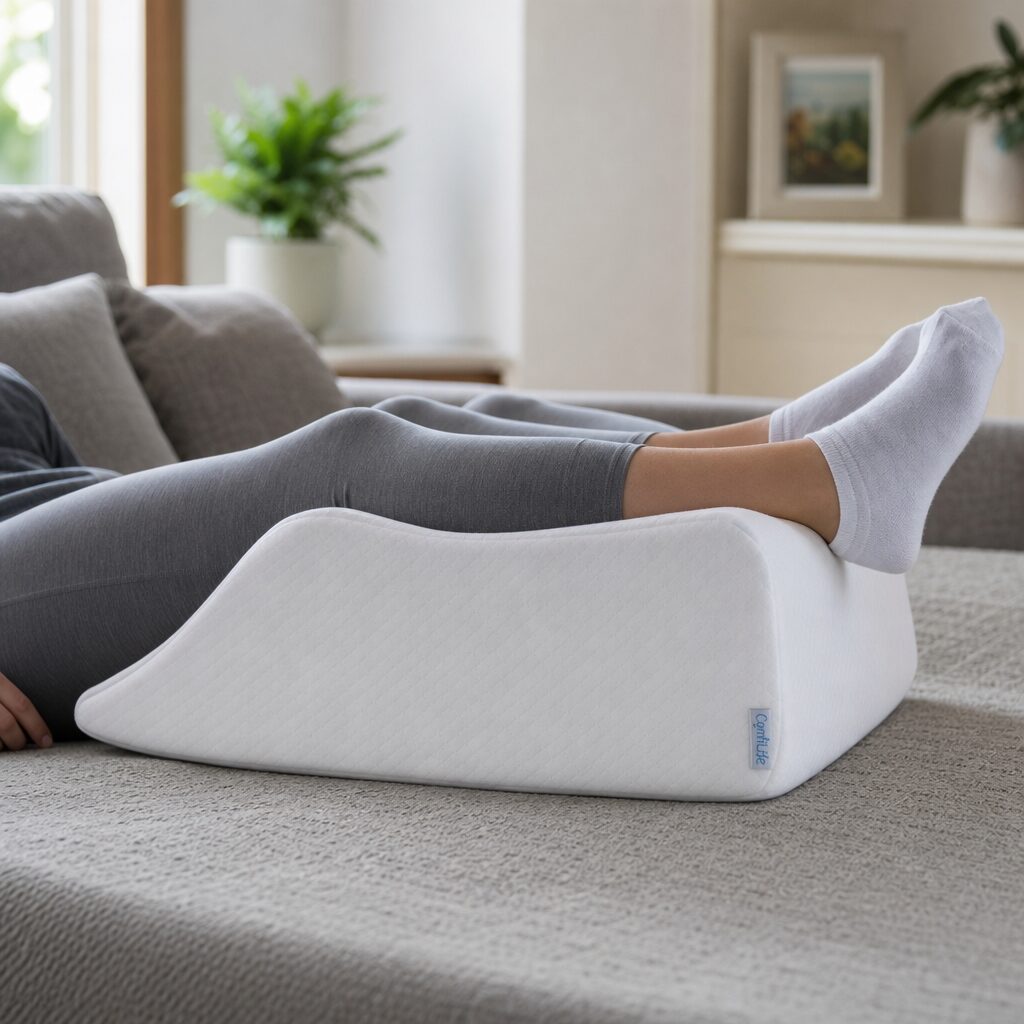
CloudBliss Leg Elevation Pillow
Memory foam leg elevation pillow with 30-degree incline. Designed for edema reduction and circulation improvement. See the direct Amazon listing.
Check Price on Amazon →The affected leg swells after stroke — from reduced mobility, venous pooling, and lymphatic slowdown. A leg elevation pillow is a simple, low-cost tool that reduces swelling and makes the leg more comfortable for therapy and walking practice.
This is written by Nick Kremers, who was paralyzed by a stroke, spent three years in a wheelchair, and rebuilt his way back to walking, typing, and training again. He built Stroke Recovery Academy out of that wheelchair, and everything on this page is filtered through what actually worked in his own recovery and the recoveries of the survivors he now coaches. Read his full story →
Memory foam leg elevation pillow with 30-degree incline. Reduces post-stroke leg swelling and improves circulation during rest.
Curated by Nick Kremers. As an Amazon Associate, SRA earns from qualifying purchases at no extra cost to you.
Reduced mobility is the primary cause. When the affected leg is not walking, pumping blood back to the heart against gravity, venous blood and lymphatic fluid pool in the lower extremity. This produces dependent edema — swelling that is worst at the end of the day and improves overnight with elevation.
Other contributors: muscle pump failure (the calf muscles that normally squeeze veins during walking are weak or paralyzed), medication side effects (some antihypertensives cause peripheral edema), and reduced protein intake in early recovery, which lowers plasma oncotic pressure and allows fluid to leak into tissues.
Gravity is the enemy of venous return. When the leg is below heart level, blood and fluid pool in the distal vessels. When the leg is above heart level, gravity assists venous and lymphatic drainage back toward the torso.
The standard recommendation: elevate the affected leg 15–20 cm above heart level for 20–30 minutes, 2–3 times per day. Combine with ankle pumps (point and flex) during elevation to activate the calf muscle pump and accelerate drainage.
Memory foam leg elevation pillow with 30-degree incline. Designed for edema reduction and circulation improvement. See the direct Amazon listing.
Check Price on Amazon →Short on time? CloudBliss Leg Elevation Pillow is the one Nick recommends first.
Check Price on Amazon →The standard "legs up the wall" yoga position is not accessible for many stroke survivors because it requires hip flexion and spinal rotation that may be limited or painful. A leg elevation pillow provides the same gravitational benefit from a supine or semi-reclined position.
Place the pillow under the calf and heel, not under the knee. Elevation under the knee creates a sharp angle that compresses the popliteal vein and actually reduces drainage. The calf and heel should rest on the pillow with the knee slightly flexed but not sharply bent.
Most post-stroke leg swelling is benign dependent edema. Some causes are not. Seek medical evaluation if: swelling is sudden and one-sided (possible deep vein thrombosis), swelling is accompanied by warmth and redness (possible cellulitis or DVT), swelling does not improve overnight with elevation (possible lymphedema or heart/kidney dysfunction), or the survivor has shortness of breath with leg swelling (possible heart failure).
Do not dismiss leg swelling as "just part of stroke recovery" without ruling out the dangerous causes first. A quick ultrasound and bloodwork can exclude DVT and systemic issues.
20–30 minutes per session, 2–3 times daily. Morning, midday, and evening are typical. Overnight elevation is also beneficial if the survivor can sleep comfortably with the leg raised.
Both is fine, but the affected leg is the priority. If the unaffected leg has normal mobility and no swelling, elevating just the affected leg is sufficient. Some survivors find it more comfortable to elevate both for symmetry.
Yes, but a dedicated leg elevation pillow is designed with the correct incline angle (typically 30 degrees) and memory foam density to maintain position without compressing the calf. A regular bed pillow tends to flatten and shift, reducing the elevation angle over time.
No — they work together. Compression stockings provide continuous daytime pressure that prevents fluid accumulation. Leg elevation provides intermittent drainage sessions that remove accumulated fluid. Use compression during the day and elevation during rest periods.
The affected leg swells after stroke — from reduced mobility, venous pooling, and lymphatic slowdown. A leg elevation pillow is a simple, low-cost tool that reduces swelling and makes the leg more comfortable for therapy and walking practice.