Nobody hands you a list for this part. Recovery isn't just PT sessions — it's the unglamorous, un-skippable stuff that makes a one-sided body functional in a two-sided world, from the kitchen to the bathroom to the nightstand.
These are the daily living aids I actually used, the ones that don't show up in any discharge paperwork but end up mattering every single day.
As an Amazon Associate, I earn from qualifying purchases. Every link on this page goes to Amazon and is tagged with my affiliate code — it costs you nothing extra, and it helps fund the free content on this site. I'm a stroke survivor sharing what worked for me, not a doctor or physical therapist. Always clear new equipment with your own care team before adding it to your recovery.
Adaptive tools that look overly medical get left in a drawer. Look for designs that are discreet enough to actually use in front of other people — that's the difference between a tool that helps and one that sits unused.
A single adaptive grip aid like EazyHold can turn almost any object — a toothbrush, a fork, a pen — into something a weak hand can hold. It's often more versatile than buying a separate adaptive version of every single item.
If you live alone or your caregiver isn't always in the room, a wireless call button is cheap insurance against a bad fall going unnoticed.
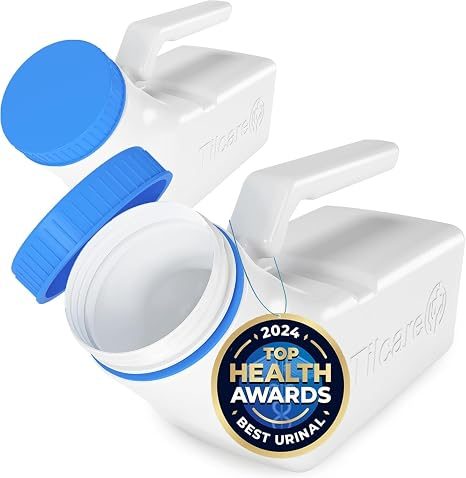
Blunt, necessary, and nobody else will tell you to buy it. Glow-in-the-dark lid for the 3am version of this problem.
Check Price on Amazon
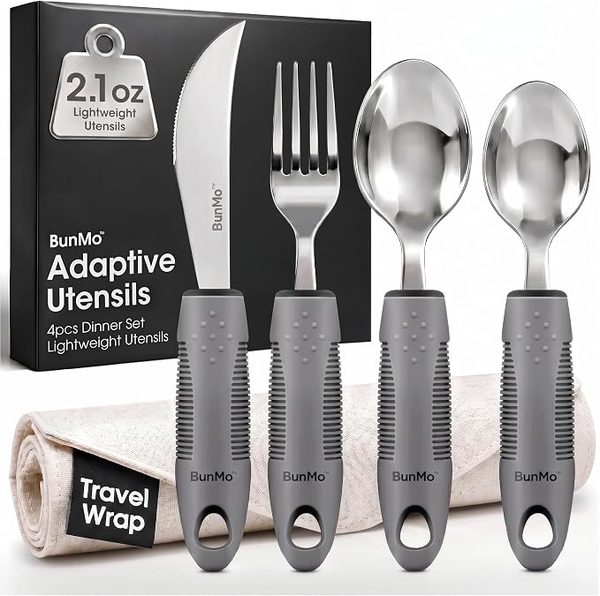
Foam easy-grip handles for the hand that can't manage a normal fork yet. Discreet enough to use anywhere, not just at home.
Check Price on Amazon
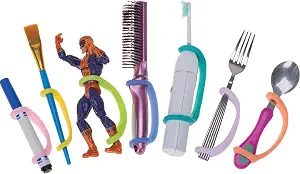
The universal cuff that turns a toothbrush, a pen, or a fork into something a weak grip can actually hold. Shows up constantly in OT clinics for a reason.
Check Price on Amazon
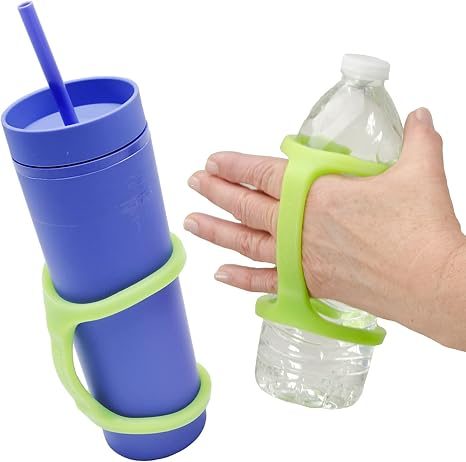
The travel-size version of the above — 12,000+ ratings and it solves the same problem for tools, bottles, and cups.
Check Price on Amazon
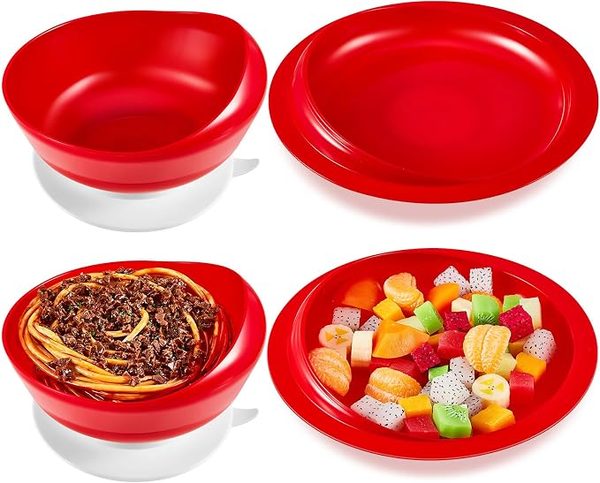
Non-slip base, raised lip, built for one-handed, tremor-affected eating. Dignity at the dinner table matters more than people realize.
Check Price on Amazon
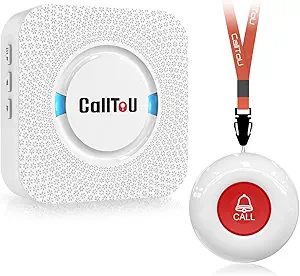
If you live alone or your caregiver isn't always in the room, this is the difference between calling for help and crawling for it. 500+ ft range through walls.
Check Price on AmazonAdaptive utensils with built-up foam grips, spill-proof bowls with a raised lip and non-slip base, and universal grip cuffs like EazyHold cover most one-handed eating challenges without needing a dozen specialty products.
If you live alone, or your caregiver isn't in the same room at all times, a wireless call button is inexpensive and can be the difference between getting help quickly after a fall and not being found for hours.